
Executive Intelligence Snapshot
This report assesses the strategic consequences of the United States reducing its military presence and air defence capacity in Iraqi Kurdistan.
The withdrawal of Patriot missile batteries from Erbil removes a protective shield over key regional economic infrastructure, raising foreign investment risks. Iraqi sovereign vulnerability increases as Erbil confronts exposed airspace amid ongoing proxy military engagements between Washington, Tehran, and regional allies.
Context
By early August 2026, US units began packing and relocating heavy air defence systems, including Patriot missile batteries, from Harir Air Base and Erbil International Airport. This repositioning degrades the high-altitude defensive canopy over Erbil while maintaining short-range C-RAM air defence coverage around diplomatic installations.
Iraqi territory functions as a significant operational zone for military clashes between the United States, Saudi Arabia, and Iran. Iranian-aligned Popular Mobilisation Units launch long-range strikes from Iraqi soil against Saudi energy infrastructure and US personnel, triggering joint US and Saudi air operations against Iranian Revolutionary Guard Corps positions in Diyala.
Prime Minister Ali al-Zaidi faces irreconcilable pressures. Washington retains direct financial leverage over Iraq, as revenues from Iraqi oil sales are deposited at the Federal Reserve Bank of New York. By regulating dollar flows to the Central Bank of Iraq, the Federal Reserve and the US Department of the Treasury leverage access to these reserves and dollar clearing mechanisms to enforce banking reforms, curb money laundering to Tehran, and compel the disarming and curtailment of Iranian-aligned Shia militias.
Concurrently, Tehran holds considerable influence over Iraq’s energy security, as the country relies heavily on external imports to sustain its national grid, particularly during summer peak demand. Iran supplies a critical share of the natural gas powering Iraqi power stations alongside direct electricity exports. On multiple occasions, Tehran has demonstrated its willingness to sever or drastically reduce these supplies, deploying energy cuts as economic and political leverage in response to sanctions or attempts to weaken the Shia militias within Iraq.
Why Does It Matter?
The degradation of military assets in Erbil reflects Washington’s shift towards an “America First” security baseline, prioritising force protection in the Persian Gulf and Jordan over fixed deployments in northern Iraq. Tehran capitalises on this vacuum by utilising Iraqi territory as strategic depth to absorb and externalise military conflicts away from Iranian borders. Iranian policymakers calculate that an exposed, politically constrained administration in Baghdad alongside a weakened autonomous region in Erbil guarantee the persistence of aligned militia networks within the Iraqi security architecture, which is vital for Tehran’s asymmetric defensive doctrine.
A drawdown of US military presence in Iraq leaves Saudi Arabia increasingly vulnerable to cross-border threats. On 28 July 2026, Iran-aligned militias operating from Iraqi territory launched over 30 aerial drones targeting oil facilities in Riyadh and the Eastern Province. In response, Saudi Arabia and US Central Command (CENTCOM) executed joint retaliatory strikes against proxy weapons depots and logistics sites across several Iraqi provinces. These strikes served as a direct attempt to reinforce Saudi Arabia’s defensive shield and signal deterrence, while protecting US personnel who are increasingly exposed.
However, as the US shifts its strategic priorities and scales back its footprint, Gulf states are increasingly questioning the long-term reliability of the US security umbrella. Riyadh faces heightened exposure moving forward, particularly as the federal government in Baghdad struggles to disarm these Iranian-aligned militias and reassert full state sovereignty.
While the US military withdrawal was demanded by the federal government in Baghdad, Iraqi Kurdistan stands to be the most exposed. As Washington’s primary regional ally, Erbil hosts key US infrastructure, including the world’s largest US Consulate General (opened in 2025). Yet, the region remains heavily targeted by Iranian missile strikes and proxy drone attacks. Constrained by Iraqi constitutional law, Erbil cannot independently negotiate foreign defence pacts or acquire heavy air defence systems without Baghdad’s approval, leaving the Kurdistan Regional Government uniquely vulnerable to cross-border coercion if US security guarantees vanish.
Monetary and structural constraints further dictate regional risk profiles. Iraq’s sovereign revenue processing remains bound to the Federal Reserve Bank of New York, giving Washington direct leverage over public sector liquidity. Conversely, Iran retains counter-leverage through its control of fuel imports for domestic power generation and its maritime dominance over the Strait of Hormuz, which handles 95% of Iraqi crude oil exports. An operational move by Baghdad against Iranian-aligned groups risks immediate energy blackouts and civil instability; conversely, non-compliance with US demands risks restrictions on physical dollar deliveries, pushing both Erbil and Baghdad toward regional shadow trade channels.
While the 2025 inauguration of the world’s largest US consulate in Erbil underscored Iraqi Kurdistan’s strategic value to Washington, regional escalation with Iran has reshaped US calculations. US defensive shields around key facilities will remain, but local Kurdish assets cannot replace US-grade air defences to safeguard the broader territory. As a result, while Erbil will maintain its role as an intelligence and coordination hub, it will inevitably confront mounting existential pressure.
Outlook
Removing primary air defence systems from Erbil escalates war-risk insurance premiums for aviation, logistics, and hydrocarbon extraction across northern Iraq. Global energy markets face heightened supply volatility due to the exposure of vital production infrastructure in Iraqi Kurdistan and neighbouring regions.
Yield spreads on regional sovereign debt reflect mounting political risk as Baghdad’s access to foreign exchange transfers from the Federal Reserve Bank of New York becomes increasingly uncertain.
Concurrently, capital inflows for regional development initiatives face prolonged delays amidst persistent long-range drone and missile activity. Primary risk sectors include commercial energy shipping, defence supply chains, and Middle Eastern banking institutions operating under increasingly restrictive international compliance standards.
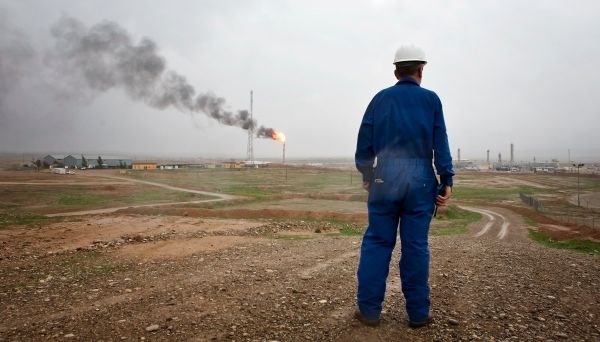
*Cover image: This picture was originally taken in 2016 during a working visit by some members of the SpecialEurasia team to Kurdistan.

SpecialEurasia Co-Founder & Managing Director. She is an International affairs specialist, business consultant and political analyst who has supported private and public institutions in decision-making by providing reports, risk assessments, and consultancy. Due to her work and reporting activities, she has travelled in Europe, the Middle East, South-East Asia and the post-Soviet space assessing the domestic dynamic and situations and creating a network of local contacts. She is also the Director of the Energy & Engineering Department of CeSEM – Centro Studi Eurasia Mediterraneo and the Project Manager of Persian Files. Previously, she worked as an Associate Director at ASRIE Analytica. She speaks Italian, English, German, Russian and Arabic. She co-authored the book Conflitto in Ucraina: rischio geopolitico, propaganda jihadista e minaccia per l’Europa (Enigma Edizioni 2022).
Read the author’s reports